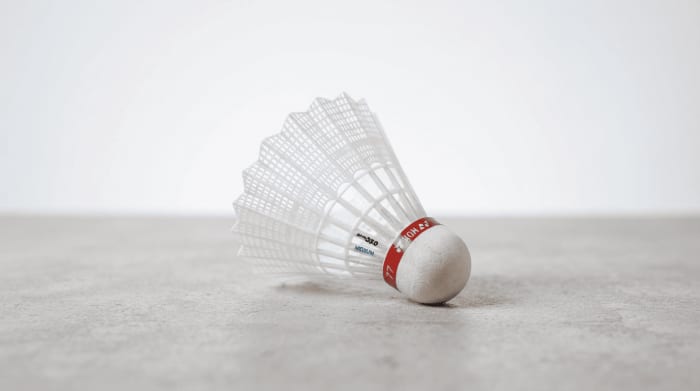








How to Make Badminton Shuttlecocks Last Longer: Steam & Damp-Sock Methods
Yellowish feather stems mean your shuttlecocks are dehydrated, not defective — steam them for 8-10 seconds over boiling water or seal them with a lightly damp sock for 24 hours to make feathers flexible again and last longer on court.
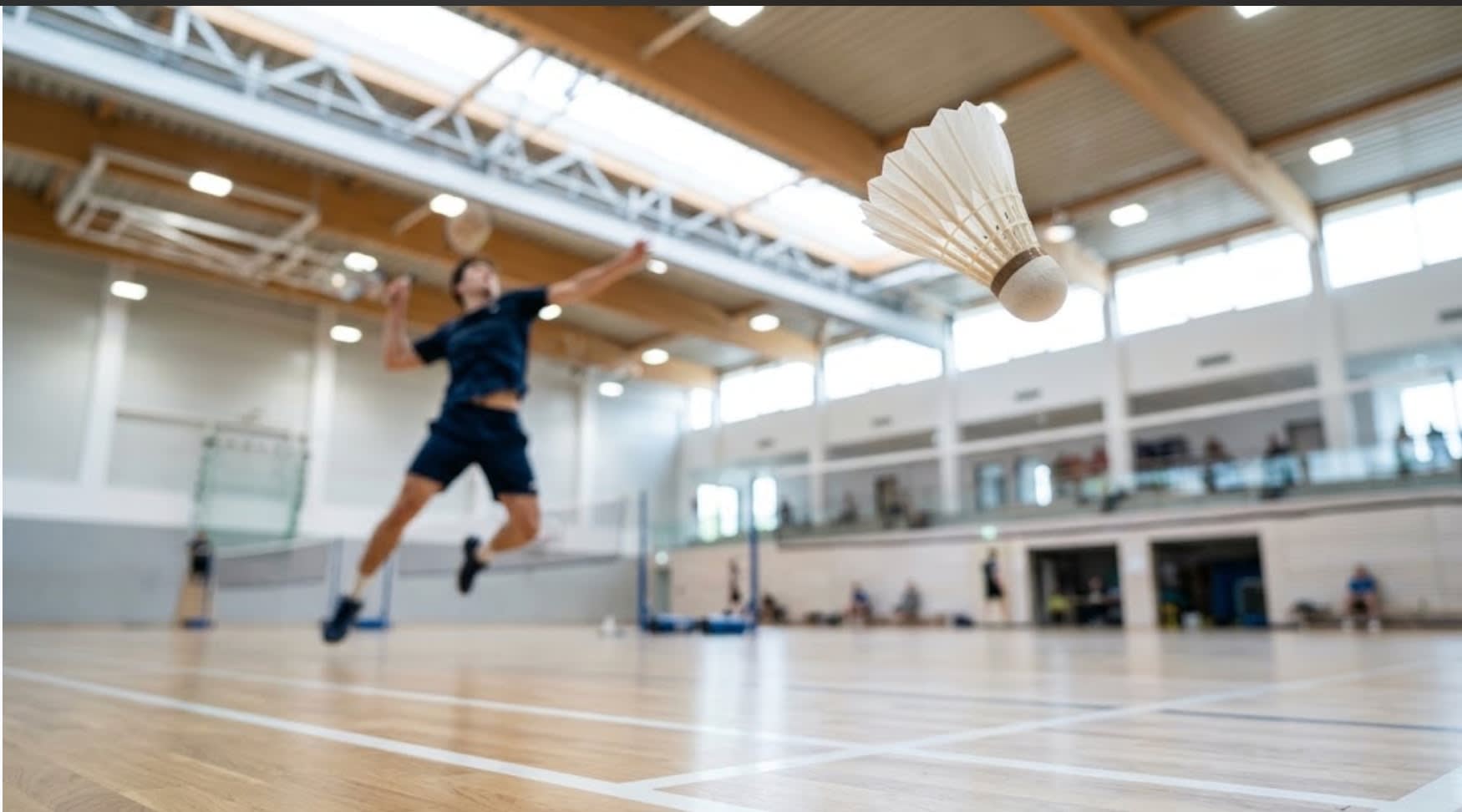
How to Make Badminton Shuttlecocks Last Longer
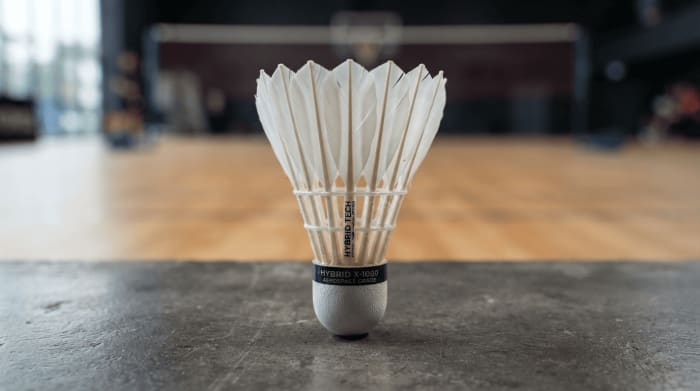
If your feather shuttlecocks are cracking or splitting fast, check the feather stems (the quills where the feathers meet the cork): if they look yellowish and feel brittle, your shuttlecocks are dehydrated, not defective. Feathers are made of keratin, the same protein as human hair and nails, and keratin needs a certain amount of moisture to stay flexible. Once that moisture is gone, the quills turn stiff and yellow, and they snap under the force of a smash instead of flexing with it. You can fix this in two ways: steaming the shuttlecock briefly over boiling water, or sealing it in a tube with a damp sock for 24 hours. Both rehydrate the feathers and noticeably extend how long each shuttlecock survives.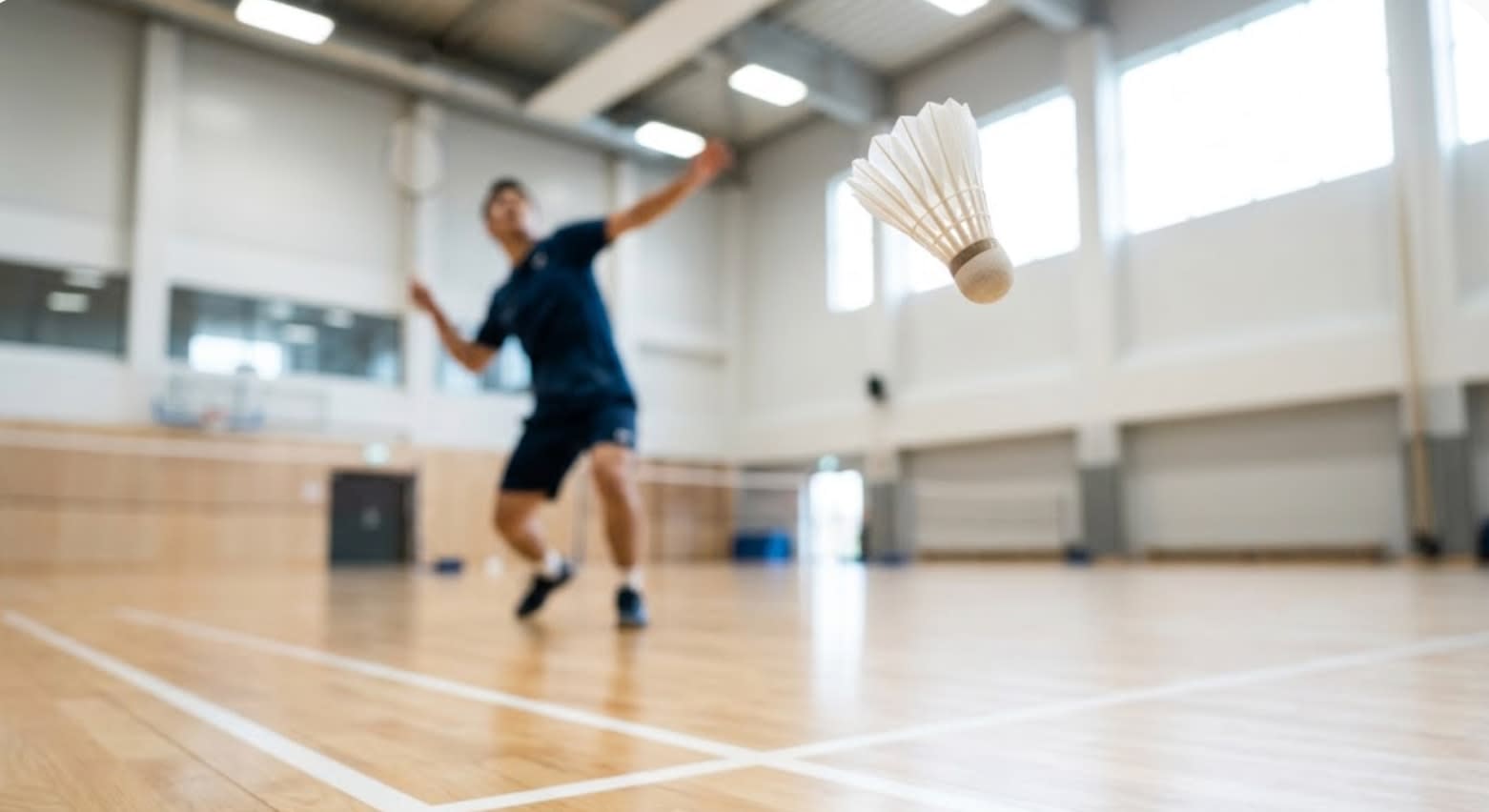
Why Badminton Shuttlecocks Break So Easily
A feather shuttlecock isn't one solid piece — it's typically 16 goose or duck feathers individually stitched and glued into a cork base, with each feather's quill (the hard central stem) doing the structural work of holding its shape mid-flight. That's a lot of small, delicate points of failure. Every smash sends a sharp shock through those quills, and a full-speed smash can generate racket-head speeds well over 300 km/h at contact. Feathers are also natural, biological material, not plastic, so they're far more sensitive to their environment than a synthetic nylon shuttle is.
Three things typically kill a feather shuttlecock early: repeated smash impact fatiguing the quills, feathers separating from the cork after the glue and thread loosen, and — the one most players overlook — the feathers simply drying out. Dry, brittle keratin has almost no give left in it, so instead of flexing on impact like healthy feathers do, it cracks clean through the stem on the very first hard hit.
How Shuttlecocks Retain Moisture in Their Feather Stems
Keratin fibers work like tiny sponges: they absorb moisture from the surrounding air and hold onto it, which is exactly what keeps a feather's quill pliable instead of glass-like. This is why quality shuttlecocks are shipped and stored in tubes that trap a bit of humidity around the feathers, and why manufacturers warn against leaving shuttles in a hot, dry room, near a heater, or under direct air conditioning airflow. In a low-humidity environment, the quills slowly give up their internal moisture, the keratin stiffens, and the stem loses its ability to absorb shock. Once you understand that the stem is basically a small moisture reservoir, the fix becomes obvious: put the moisture back before it plays badly and breaks.
How to Tell If Your Shuttlecocks Need Rehydrating
Before you throw out a batch of shuttlecocks that seem to be breaking too fast, check the feather stems where they meet the cork. If the stems look yellowish rather than a fresh white/off-white, and feel stiff or brittle rather than slightly springy when you press them gently, that's the sign: the feathers have dried out and most probably just need hydration, not replacement.
Method 1: Steaming the Shuttlecock
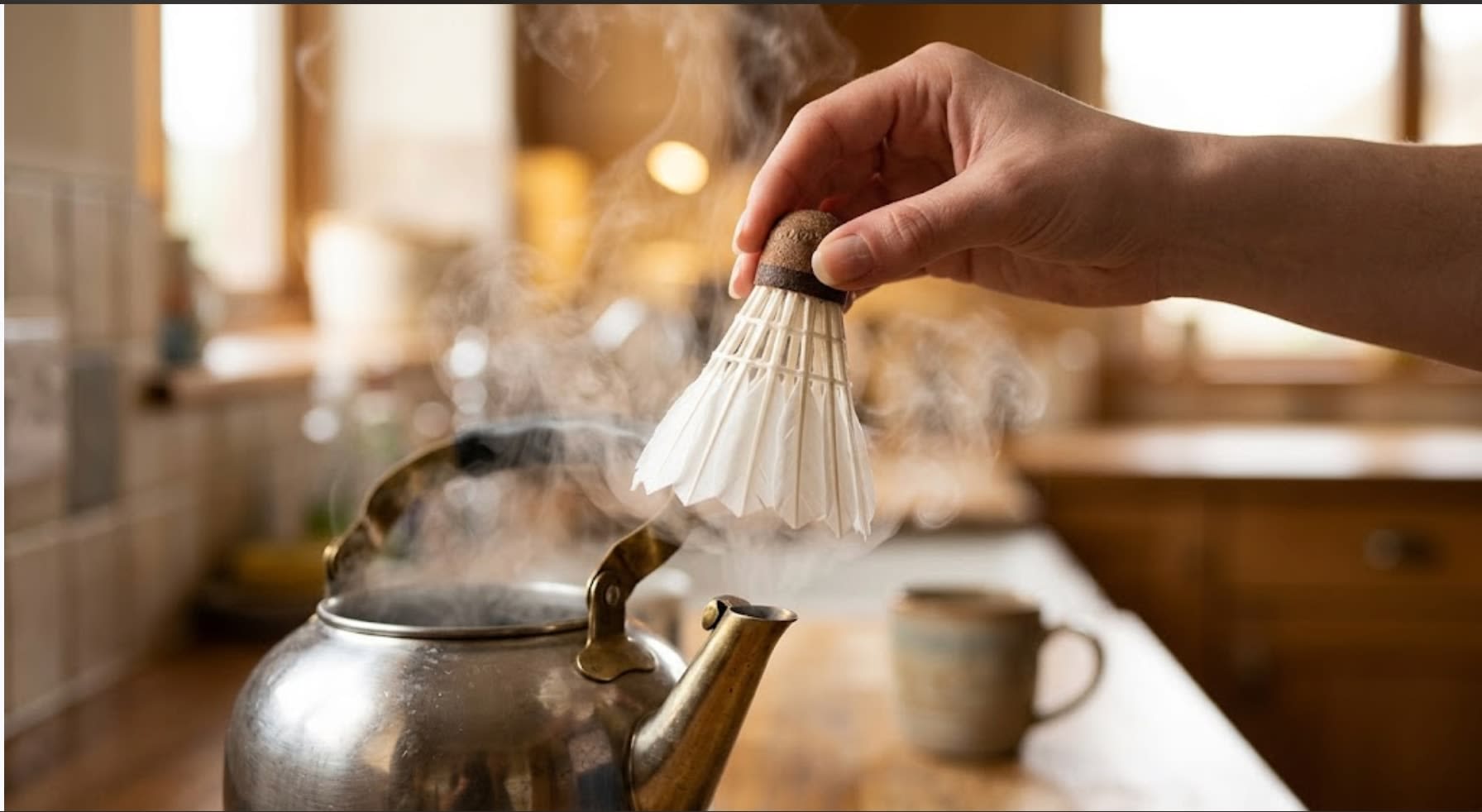
Steaming is the faster of the two methods and works well right before a session.
- Bring a kettle or a small pot of water to a rolling boil.
- Hold the shuttlecock by the cork, feathers pointing downward, about 15-20 cm above the steam — close enough to expose the feathers to the vapor, far enough that they never touch the boiling water or the pot itself.
- Expose the feathers to the steam for about 8-10 seconds, gently rotating the shuttlecock so all the feathers get even exposure.
- Remove it and let it sit at room temperature for a couple of minutes to cool and let the moisture settle evenly into the quills before you hit it.
- If the stems still feel stiff, repeat for another 5-8 seconds rather than holding it over the steam for one long stretch, which risks over-wetting or warping the feathers.
Method 2: The Damp-Sock Tube Method (24-Hour Soak)
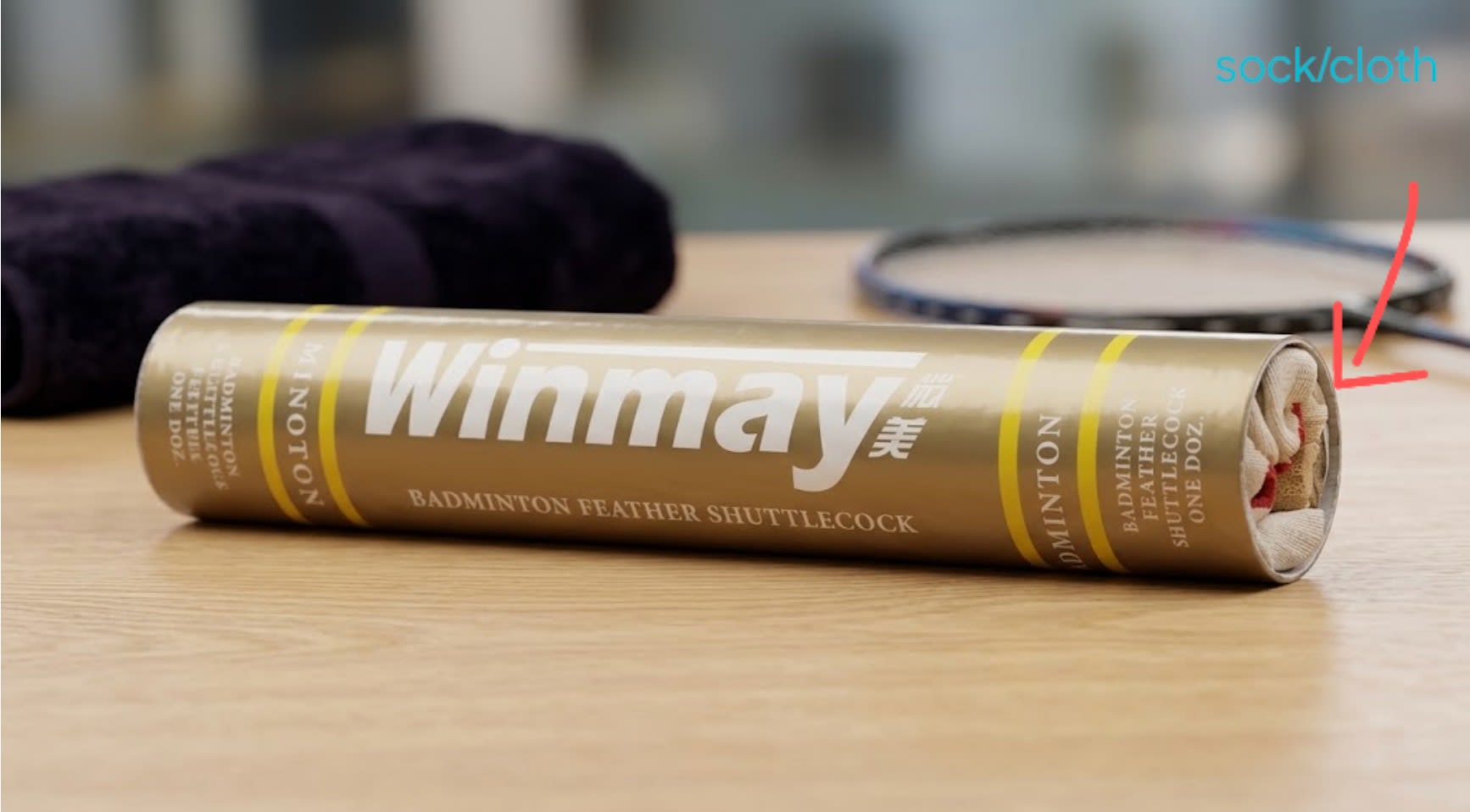
This method takes longer but rehydrates the feathers more gently and evenly, which is better for a whole tube at once.
- Dip just the feather end of the shuttlecock (never the cork) into a cup of water for about 10 seconds, then take it out.
- Take a small towel or a sock and soak it in water, then wring it out until it's no longer dripping — you want it damp, not soaking wet. Too much water can warp the feathers or encourage mold.
- Place the damp sock inside one end of the shuttlecock tube, at the end where the feathers point, not the cork end.
- Leave the shuttlecocks in the sealed tube with the damp sock for about 24 hours so the trapped humidity slowly works into the quills.
- After a day, take the shuttlecocks out — the feather stems should feel noticeably more flexible, and they're ready to play. They'll typically hold up longer than they would have dry.
Additional Tips to Extend Shuttlecock Life
- Keep the tube capped when shuttlecocks aren't in use, away from direct AC vents, heaters, or windowsills where the air is driest.
- Rotate through 2-3 shuttlecocks in a session instead of hammering one shuttle with every smash — this spreads out impact fatigue on the quills.
- Store tubes at normal room temperature; extreme heat dries feathers out fast, and extreme cold makes them brittle too.
- Check your racket's string tension — overly tight stringing transfers more shock into the feathers on contact, which shortens their life regardless of hydration.
- Avoid letting shuttlecocks clip the top of the net repeatedly during warm-up drills; repeated edge contact stresses the same few feathers.
FAQ
Why do badminton shuttlecocks break so easily?
Feather shuttlecocks are made of natural, individually stitched feathers whose quills take the full shock of every smash. Fatigue from repeated impact, glue/thread loosening at the cork, and dried-out feathers all make them break faster than a solid synthetic object would.
How do I know if my shuttlecocks need rehydrating?
Look at the feather stems where they meet the cork. If they look yellowish and feel stiff or brittle rather than slightly springy, they're most probably dehydrated and need moisture, not replacement.
Is it safe to steam shuttlecocks?
Yes, as long as you hold the feathers a safe distance above the steam (never touching boiling water) for only 8-10 seconds at a time, rotating for even exposure.
Can I use the damp-sock method for both feather and nylon shuttlecocks?
The damp-sock and steaming methods are meant for natural feather shuttlecocks, since the problem is dehydrated keratin. Nylon-skirt shuttlecocks don't have real feather quills, so moisture retention isn't the same mechanism for them.
How long do rehydrated shuttlecocks last after treatment?
[NEEDS DATA: exact extended lifespan in games/minutes isn't something we have measured or sourced data for — this depends on smash frequency, humidity, and shuttle speed rating, so we're not stating a specific number.]
Feather shuttlecocks aren't fragile by design — they're just sensitive to moisture, and a yellow, brittle stem is usually a fixable problem rather than a reason to bin the tube. Steam them for a quick pre-game fix, or give them a full 24-hour damp-sock soak when you have the time, and you'll get noticeably more play out of every shuttle.
Written by
Admin
Badminton enthusiast and content contributor at ShuttleZone.